
As From W. Eugene Smith's Window

As a native Pittsburgher, the effect that W. Eugene Smith has had on the photographic history of my city is hard to avoid. His monumental work that was initially supposed to last only 1 month with 100 images took him more than 2 years to complete and resulted in more than 22,000 negatives. After completing the Pittsburgh project, he considered it to be a failure, but for so many it laid the foundation of what a long term documentary project steeped in care could be. With his earnest approach, Smith showed a holistic view of the individuals and geography that he encountered.
After finishing his monumental Pittsburgh project, Smith — who was known to be an erratic and often unpleasant person — left his wife and four children in 1957 and moved from Croton-on-Hudson, New York to a 4th floor loft at 821 Sixth Avenue in Manhattan’s flower district.
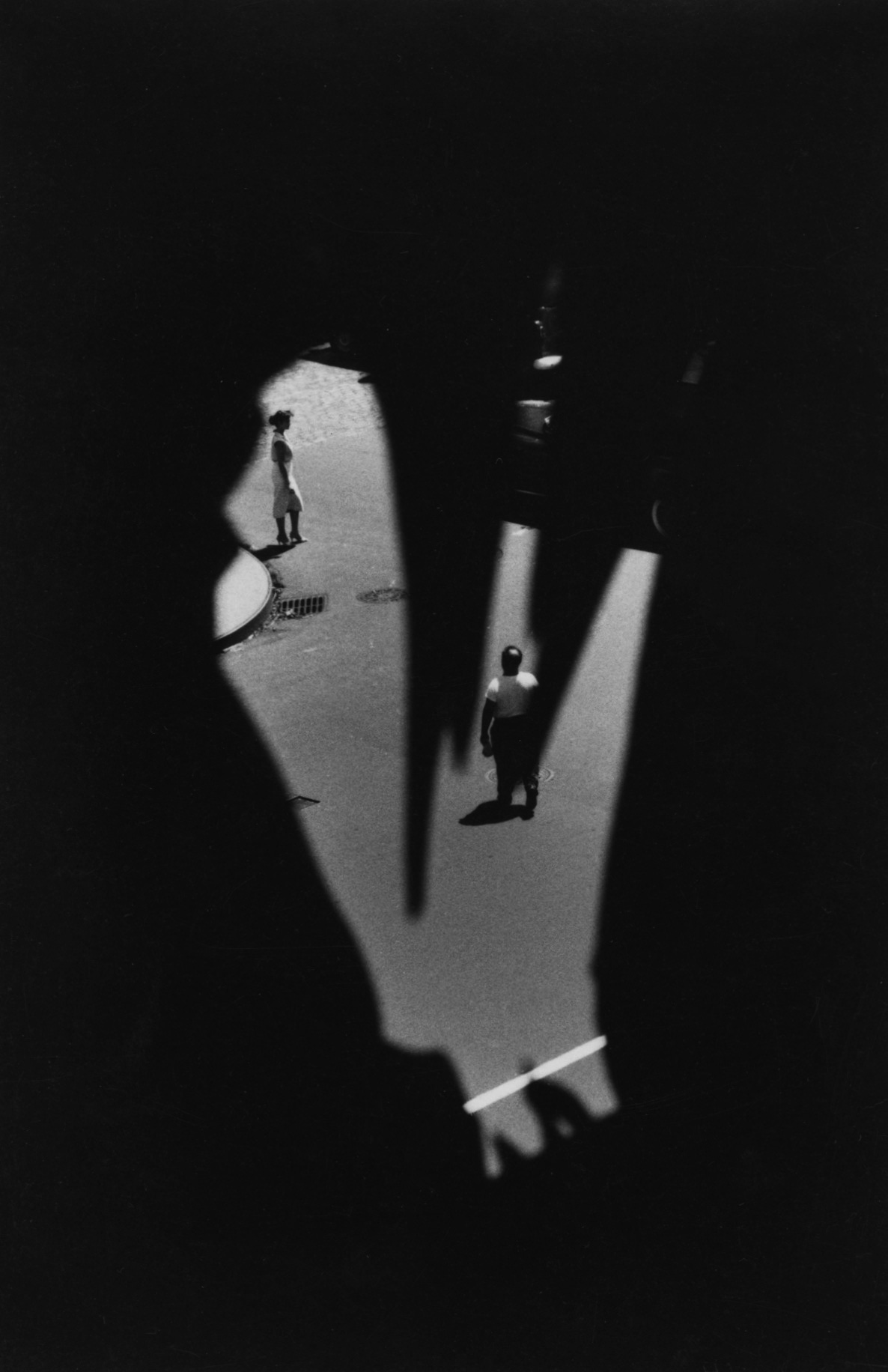
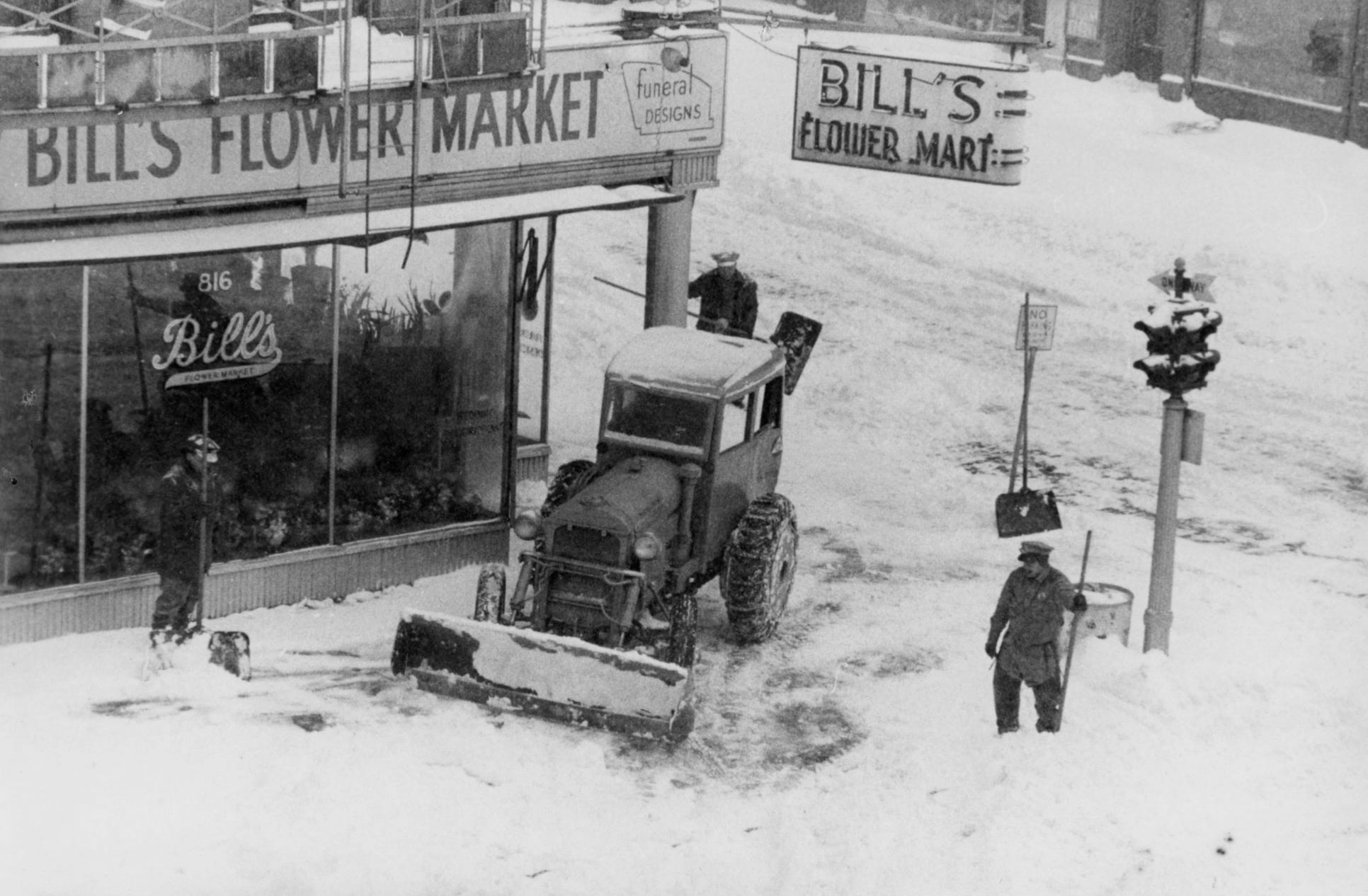
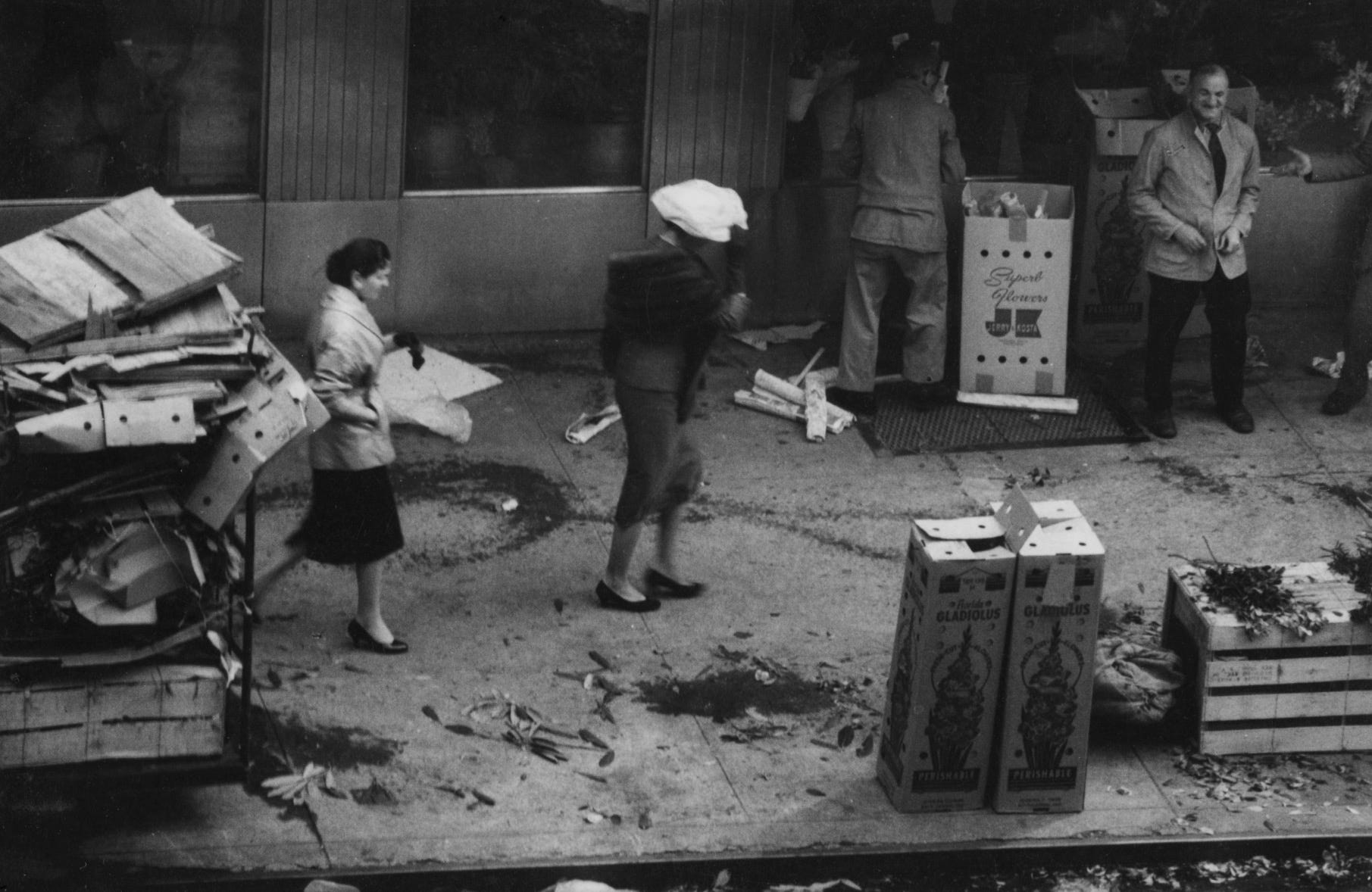
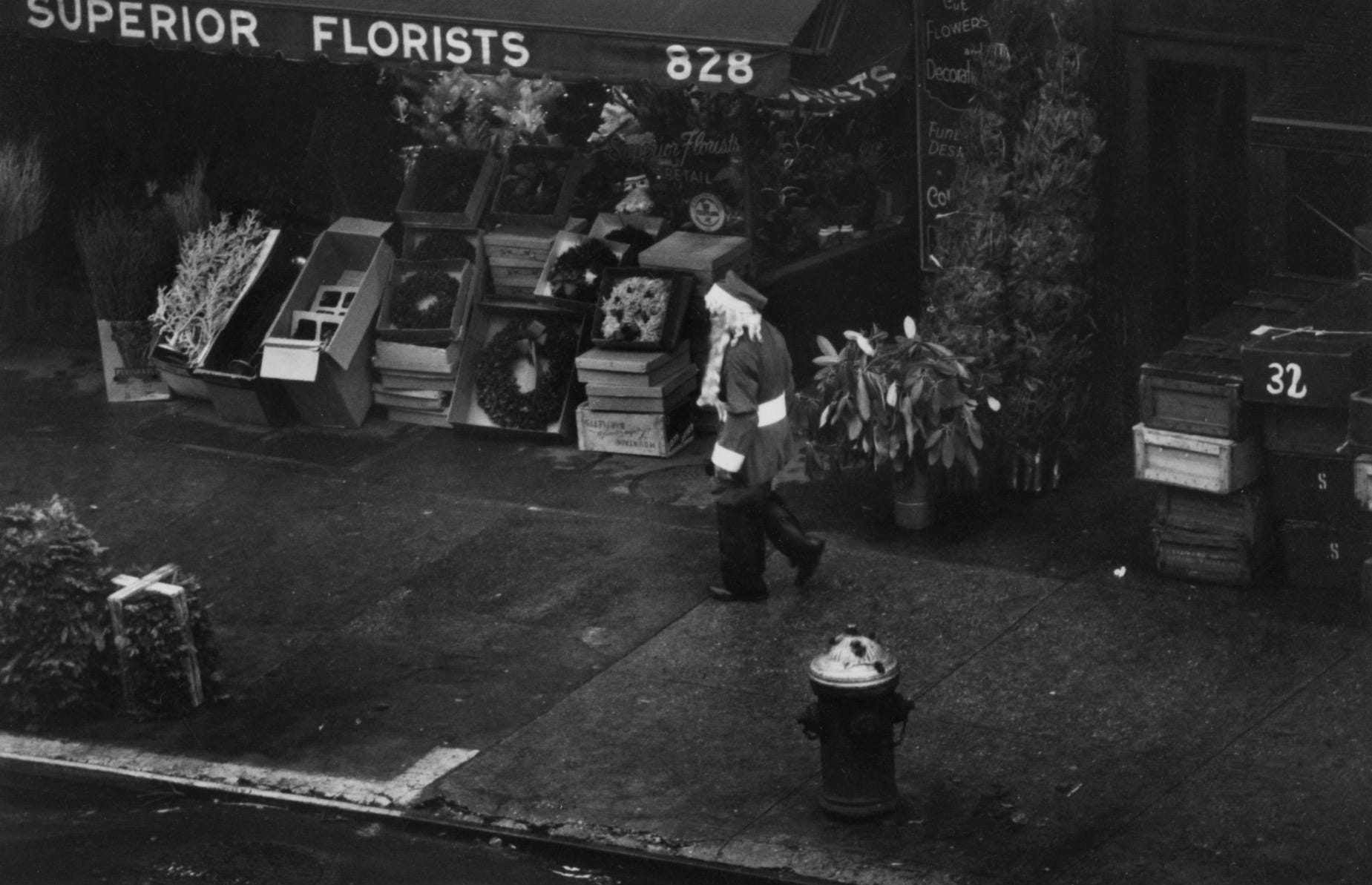
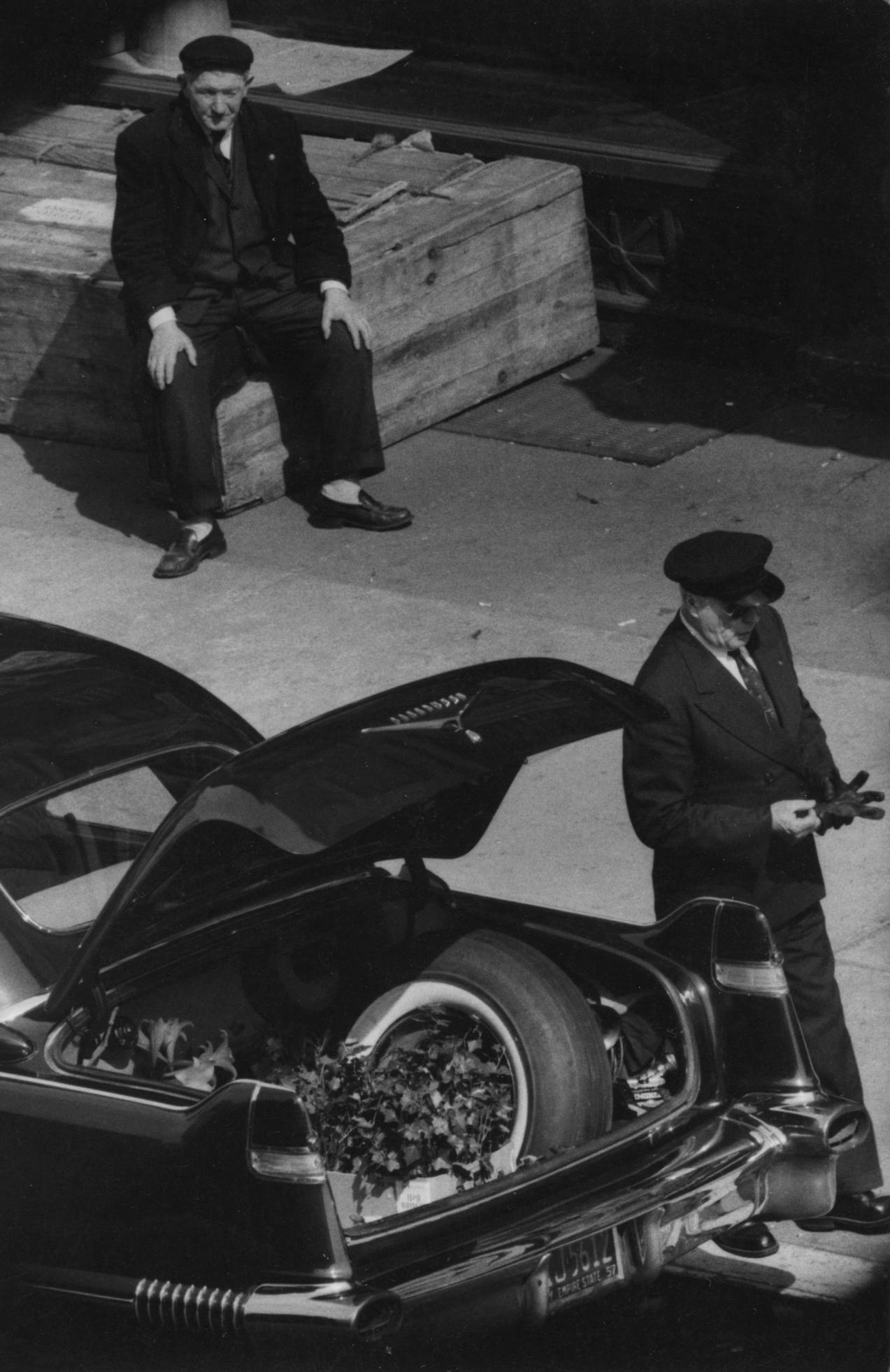
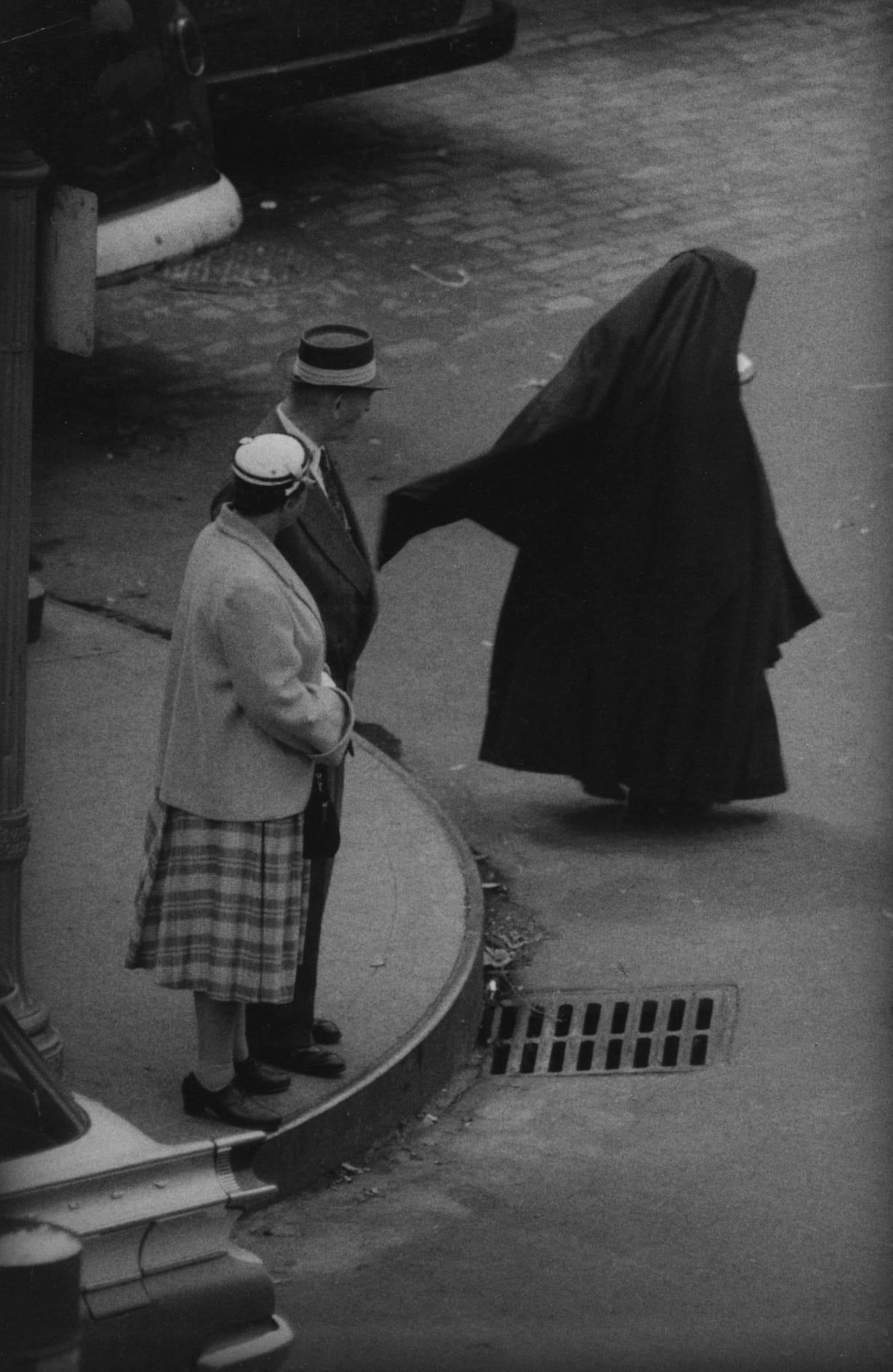
During the next eight years, Smith, often high on amphetamines and alcohol, shot more than 1000 rolls of film from his window capturing the chaos and beauty of daily life in New York City. The images are voyeuristic in a way that only a white, male, mid-century photojournalist could create. Each of the photographs feel as though it could be a short story depicting a fleeting moment of its inhabitants' lives. Despite him being so physically removed from his subjects, which made him rely on zoom lenses, there is tremendous intimacy to many of Smith’s shots.
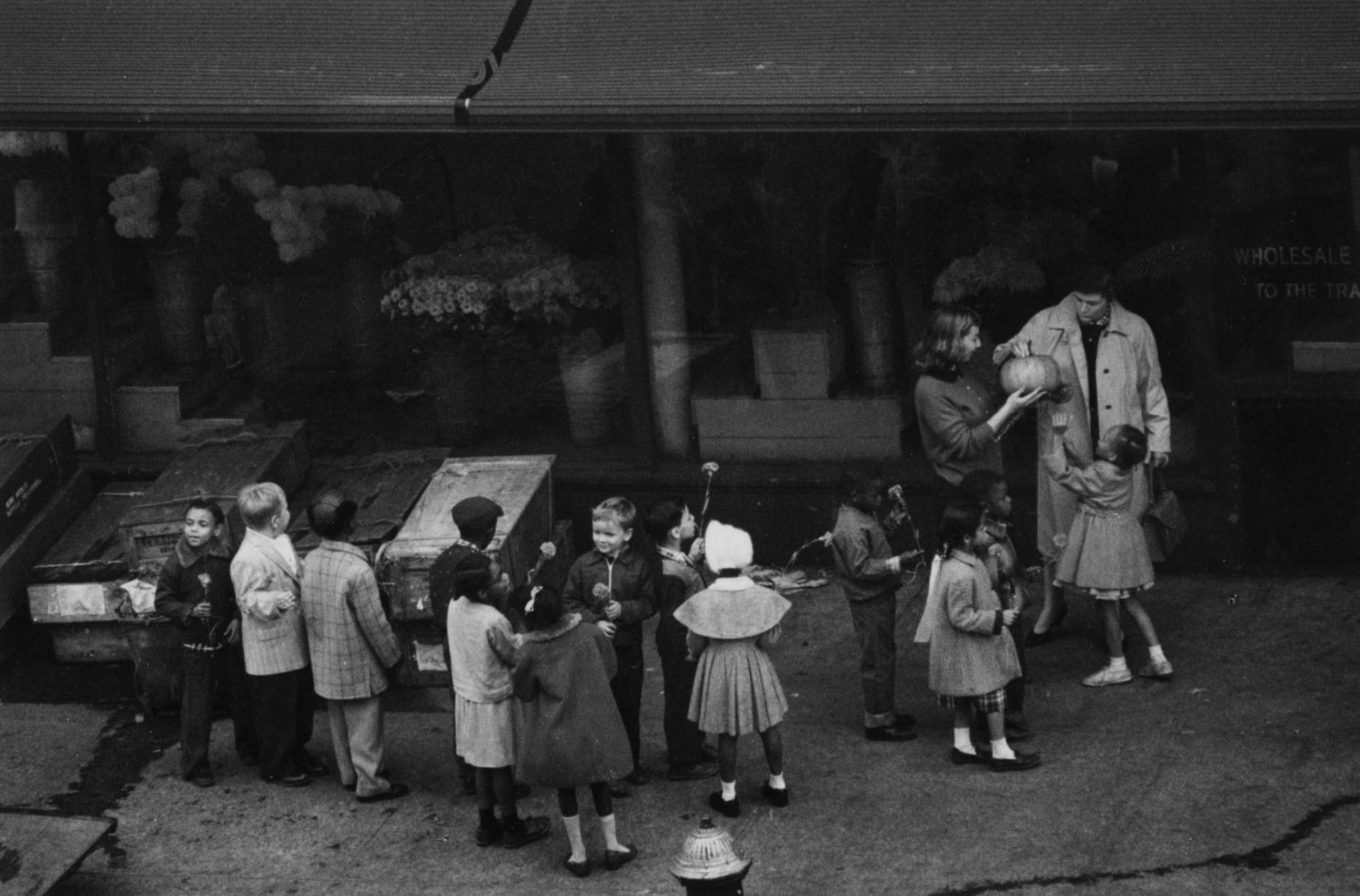
There’s one photograph of a group of children each holding a single carnation while their teachers inspect a small pumpkin at the front of the shot. This image makes me think of days that I would come home on Valentine's Day as a child and give my own mother a single flower that I was given at school by my teachers.
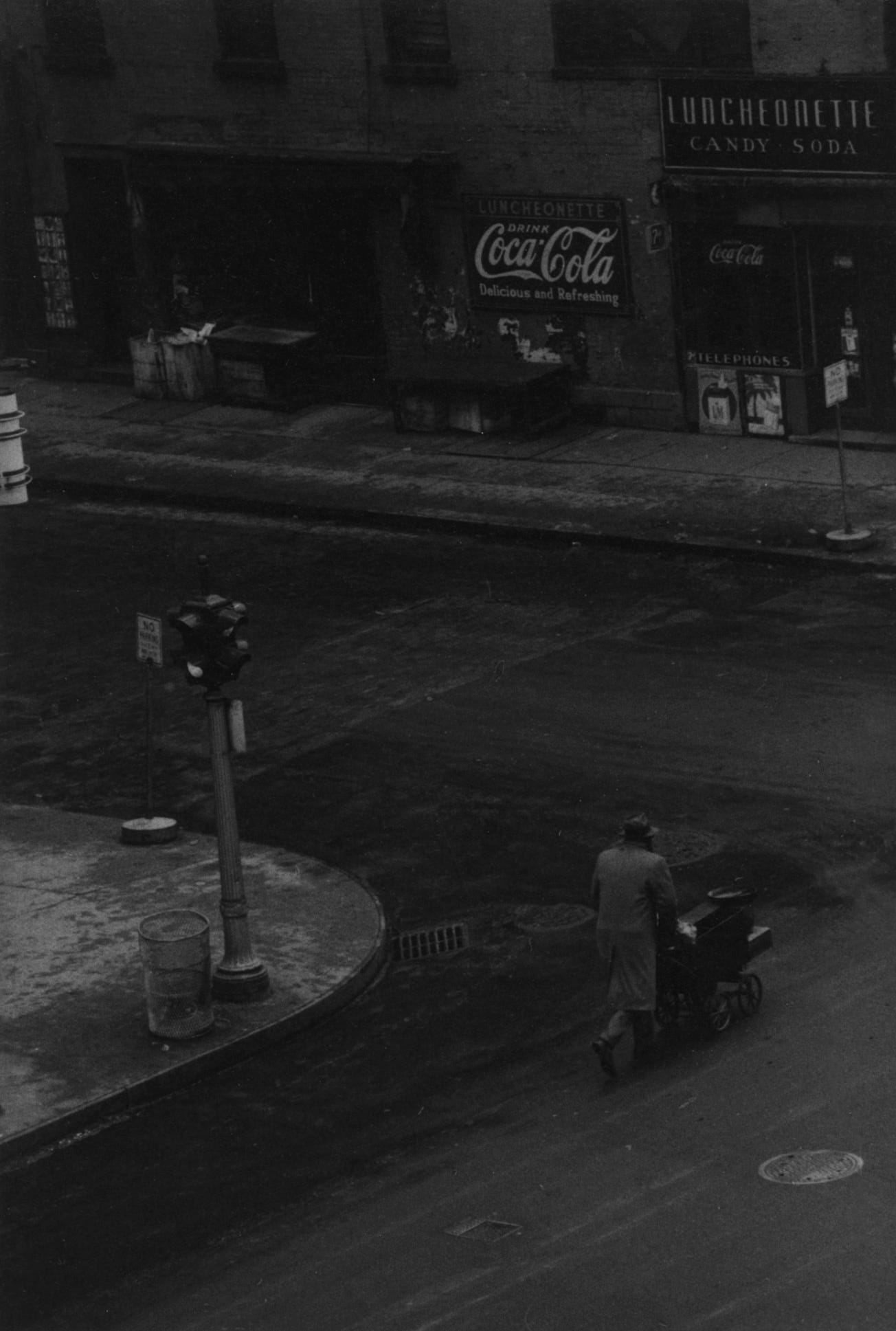
The images collected here came from the personal collection of Carol Carlisle, editor of Popular Photography for nearly 35 years. They were used as Smith’s proof prints, and often have tack holes in them and aren't printed to perfection. But one of the most captivating prints for me is the darkest print among the group. It features a man rolling some sort of cart down the middle of the street and a Coca Cola advertisement on a wall in the background. The graphic composition coupled with the extremely dark quality of the print, makes the image feel like a perfect combination of the styles of Roy DeCarava and Saul Leiter — Smith’s New York contemporaries.
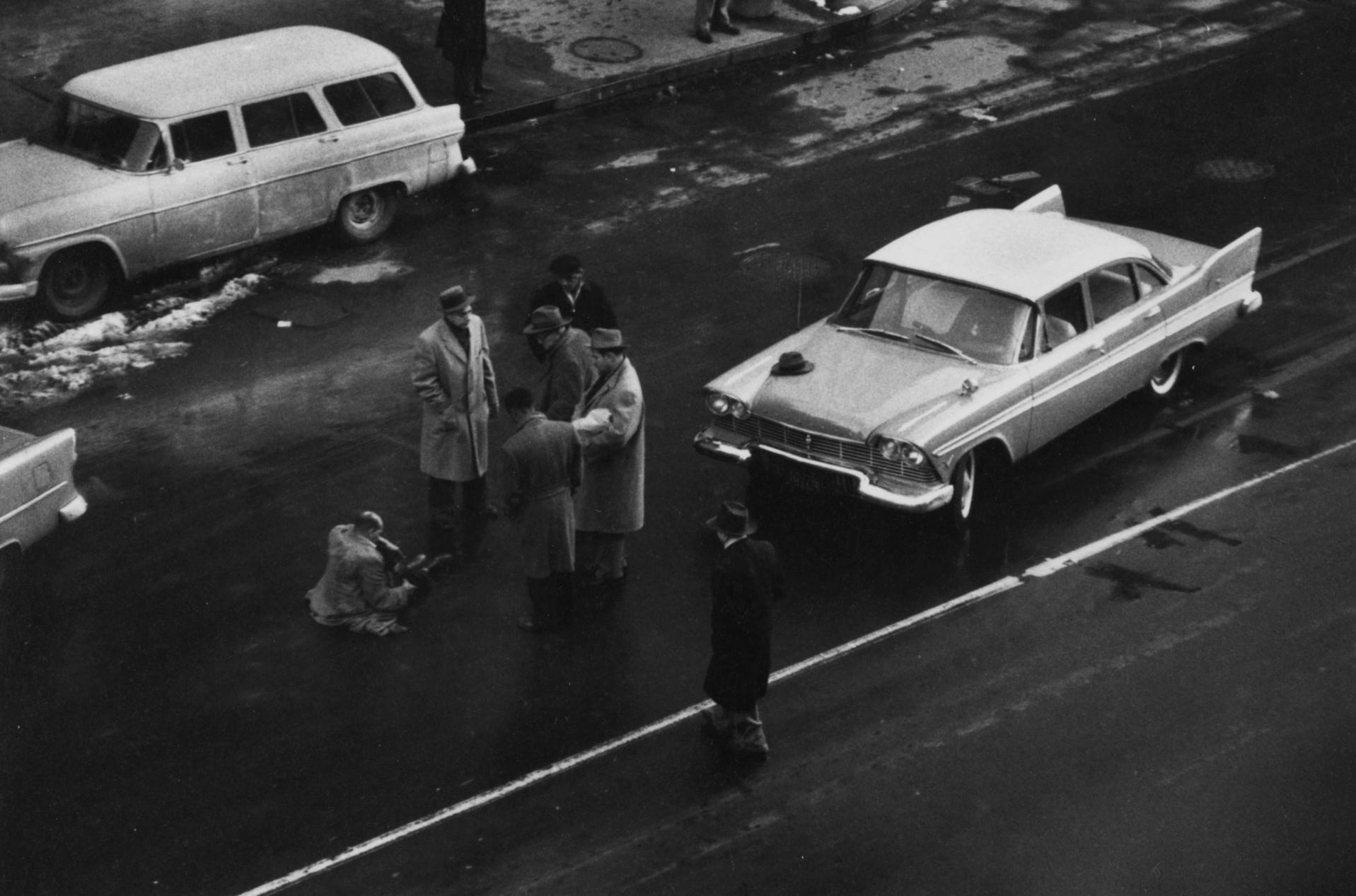
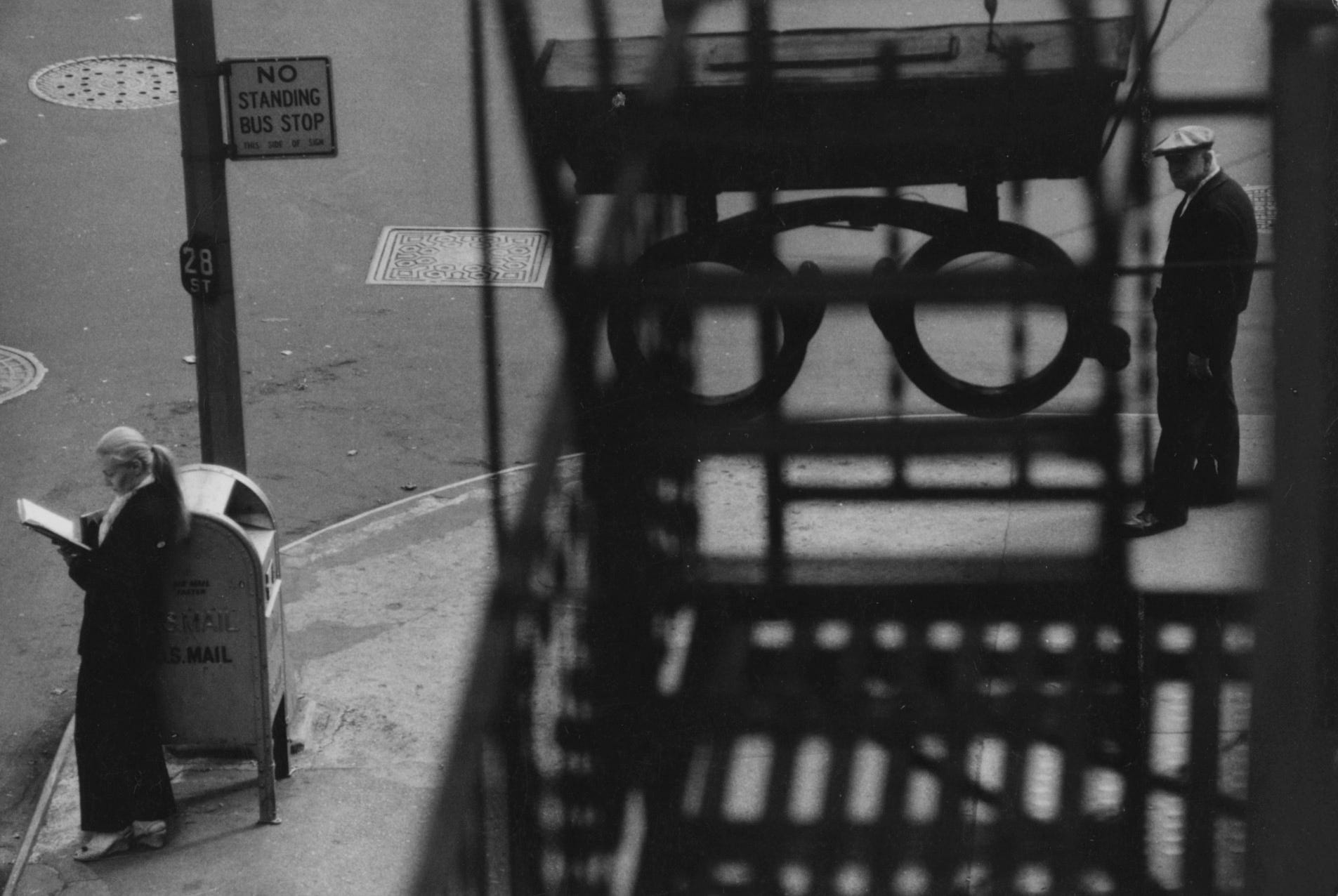
There is poetry in these images and they serve as set pieces for city life. One striking and comical example is one image of a man on the ground after presumably being hit by a car. A collection of men overlook the injured man with another crossing the street to investigate the commotion. It feels absurd to me and like it could be a film still from a movie long forgotten. Another is of an older man in the top right of the frame situated past a fire escape that holds a large metal set of eyeglasses in between him and a young blonde woman reading a book and leaning on a mailbox. The viewer can feel his desire, or maybe it's his contempt. But it’s in images like this that the viewer gets a multi-layered act of voyeurism in which we are looking through Smith at this man who is looking at a young woman —all with a giant set of glasses in the middle of the frame, if the metaphor wasn't clear enough.
The improvisation that walking down the street in Manhattan affords you is reflected by Smith’s home life inside the loft. Being the neighbor of composer and jazz pianist Hall Overton, Smith had a constant flow of Jazz greats that came through his loft, including Charles Mingus, Zoot Sims, Bill Evans, and Thelonious Monk, among many others. And it was only until Sam Stephenson came knocking at Center for Creative Photography’s door that the full scope of Smith’s involvement in the New York jazz scene was known. There, he discovered 1,740 reels of recorded tapes that Smith made of private jazz performances and nearly 40,000 photographs. So with that framing, the viewer can see and almost hear the rhythm of the NYC streets in all its cacophony, energy, and complexity. There's a beautiful, if not terrifying dance that walking and driving in New York City provides and in this body of work, Smith acts as a stationary flaneur that had his camera tilted out the window just past his darkroom.
If you’re interested in seeing more about this loft, I recommend watching the documentary The Jazz Loft According to W. Eugene Smith.